
Article Outline & Detailing Table
| Section | Heading | Word Count Target | Key Focus Areas |
| Introduction | The Magic of Wisdom: What is a Salawikain? | 100-200 words | Hook the reader, define salawikain naturally, establish conversational tone. |
| H2 #1 | Connecting to the Past: The Heart of Filipino Proverbs | 100-200 words | Ancestral wisdom, oral tradition, cultural heritage. |
| H2 #2 | Why Do We Use Salawikain Every Day? | 100-200 words | Practical life guidance, moral values, easy learning. |
| H2 #3 | Example 1: The Value of Hard Work | 100-200 words | “Pag may tiyaga, may nilaga” meaning, real-life application. |
| H2 #4 | Example 2: Adapting to Change | 100-200 words | “Hangga’t makitid ang kumot” meaning, flexibility in life. |
| H2 #5 | Example 3: The Fruit of Your Actions | 100-200 words | “Kung may tinanim, may aanihin” meaning, cause and effect. |
| H2 #6 | Example 4: Respecting Others | 100-200 words | Golden rule concepts, community living, empathy. |
| H2 #7 | How to Teach Proverbs to Kids | 100-200 words | Storytelling, simple language, daily family routines. |
| H2 #8 | Salawikain in Modern Times | 100-200 words | Social media, modern life relevance, preserving culture. |
| H2 #9 | The Beauty of Tagalog Poetry | 100-200 words | Rhyming words, artistic expression, cultural pride. |
| H2 #10 | Sharing Your Favorite Sayings | 100-200 words | Personal reflection, connecting with family, passing the torch. |
| FAQs | Frequently Asked Questions | ~300 words | 6 simple questions and answers about proverbs. |
| Conclusion | Keep the Wisdom Alive | 100-200 words | Summary, engaging call to action. |
The Magic of Wisdom: What is a Salawikain?
Have you ever heard a short phrase that instantly makes you think? Every culture has special sayings that teach us how to live. In the Philippines, a traditional proverb is known as a Salawikain. A salawikain is a short, poetic sentence packed with deep meaning. Long before books were everywhere, our elders used a salawikain to share life lessons with their children.
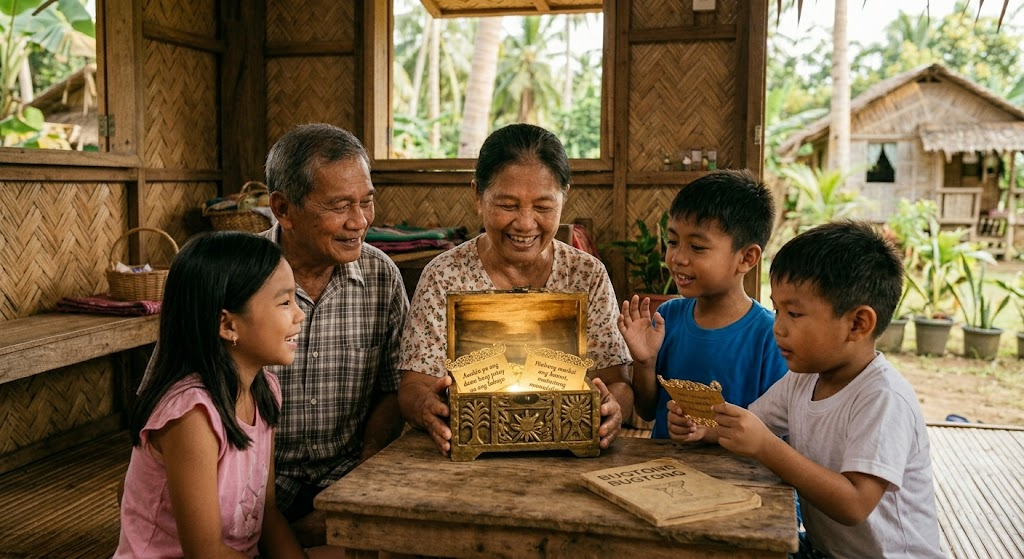
Think of a salawikain as a tiny treasure chest of ancestral wisdom. When you open it, you find a golden rule for everyday living. Growing up, I remember my grandmother reciting a salawikain whenever I faced a tough choice. At the time, I just nodded along. As I grew older, I realized how much those simple words helped me make better decisions. Let’s explore why a salawikain remains so powerful today.
Connecting to the Past: The Heart of Filipino Proverbs
The roots of salawikain go back hundreds of years in the Philippines. Our ancestors were very observant people who lived close to nature and their communities. They created these rhythmic, easy-to-remember sayings to pass down survival tips, cultural values, and spiritual beliefs. Because these traditional sayings were spoken out loud from generation to generation, they became a core part of Filipino folklore and heritage.
Sharing a salawikain was like a community hug. It united families and neighbors under shared values. When someone spoke a salawikain, everyone instantly understood the deeper message. It connected the listener directly to the experiences of their parents, grandparents, and ancient ancestors. This deep connection is why a salawikain still feels so warm and personal today. It is history speaking directly to our hearts.
Why Do We Use Salawikain Every Day?
You might wonder why we still use a salawikain in our fast-paced, modern world. The truth is, human nature does not change. We all need simple, practical guidance when life gets confusing or difficult. A salawikain cuts through the noise. It gives us clear, actionable advice without using complicated words or long lectures.
Using a salawikain helps us build good character and strong morals. It teaches us how to treat our neighbors with kindness, how to stay humble when we succeed, and how to stay strong when we fail. Because they are short and often rhyming, you can easily remember a salawikain in your head. Whenever you need a quick boost of courage or a reality check, a familiar salawikain is always there to guide you.
The Value of Hard Work
One of the most popular examples of a salawikain is “Pag may tiyaga, may nilaga.” Translated simply, it means that if you work hard and are patient, you will enjoy the rewards of your labor. Just like waiting for a delicious stew to cook, your goals take time, effort, and dedication.
I remember my father saying this salawikain to me when I was struggling with a difficult school project. I wanted to quit because it was taking too long. But those simple words reminded me that giving up gets you nowhere. Putting in the effort every single day is the only way to reach the finish line. This salawikain teaches us that perseverance is the true secret to success.
Adapting to Change
Life does not always go the way we plan. Sometimes, we face sudden storms or tight budgets. This is where the salawikain “Hangga’t makitid ang kumot, matutong mamaluktot” comes in handy. It means that if your blanket is short, you must learn how to bend your body to fit under it.
In everyday terms, this salawikain teaches us the art of adjustment and contentment. When you have less money or fewer resources, you learn to live simply and adapt to your environment. You do not panic or complain. Instead, you stretch what you have and stay positive until better days arrive. It is a beautiful lesson in financial wisdom and emotional flexibility.
The Fruit of Your Actions
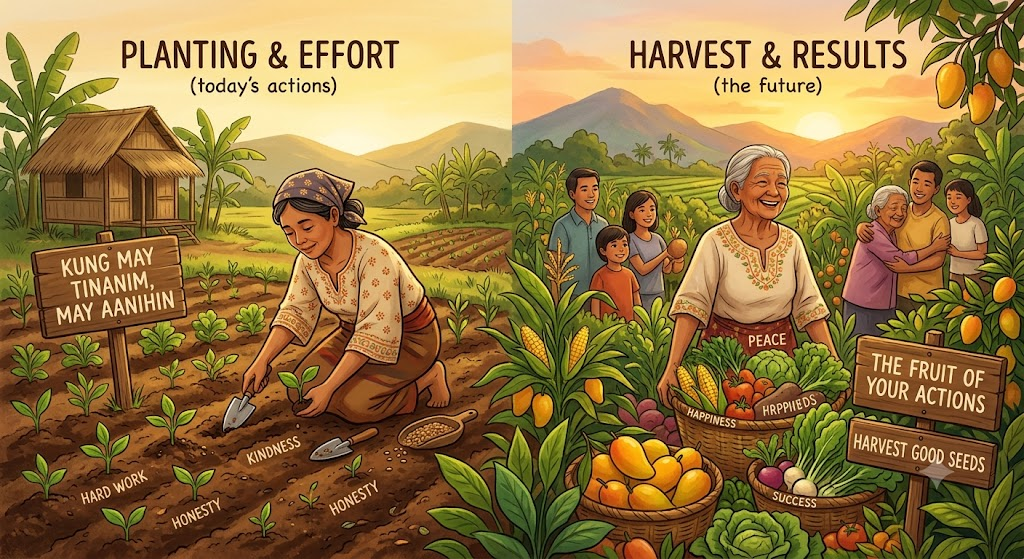
We often wonder why certain things happen to us. The salawikain “Kung may tinanim, may aanihin” gives us a very clear answer. It means that whatever you plant, you will harvest later on. Your future is simply the direct result of your daily actions and choices today.
If you plant kindness, you will harvest friends. If you plant laziness, you will harvest struggle. It is a timeless lesson in cause and effect. Whenever I am tempted to take a shortcut, this salawikain pops into my mind. It makes me stop and think about the future. It reminds me that planting good seeds today is the only way to enjoy a happy and peaceful life tomorrow.
Respecting Others
Living in a community means getting along with people who are different from you. The salawikain “Huwag gawin sa iba ang ayaw mong gawin sa iyo” is the local version of the universal golden rule. It clearly states that you should never do to others what you would not want them to do to you.
This salawikain is all about empathy and respect. Imagine a world where everyone follows this simple rule. There would be no bullying, no cheating, and no fighting. It is an amazing tool for teaching young children how to share, play nicely, and care for their friends. It puts the focus on how our actions make other people feel.
How to Teach Proverbs to Kids
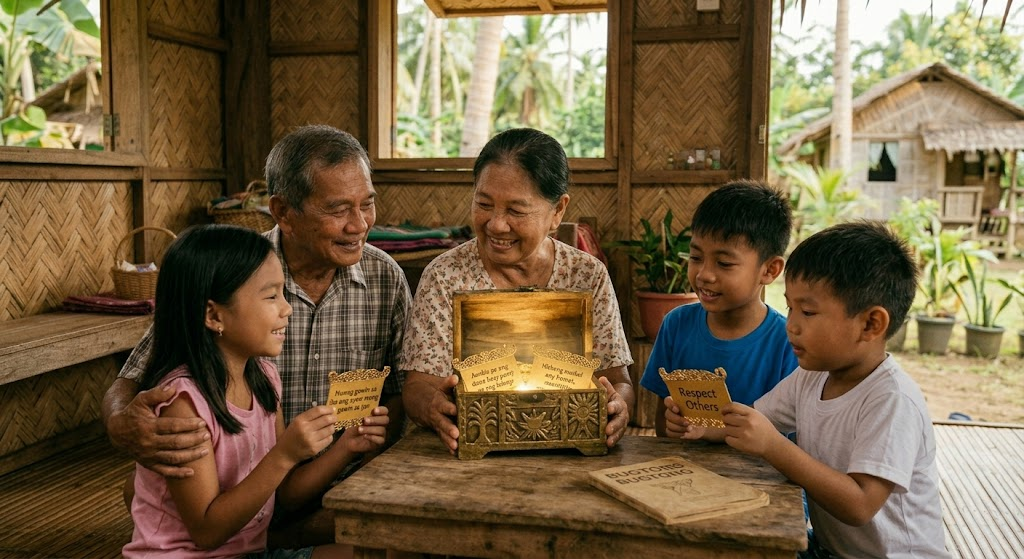
Passing down a salawikain to the next generation is a wonderful family activity. Children love stories and short, catchy phrases. You do not need to sit them down for a boring classroom lesson. Instead, you can weave a salawikain naturally into your daily conversations at home.
For example, when your child cleans up their toys, you can praise them using a salawikain about diligence. When they share a snack, you can connect it to a saying about kindness. By making these traditional sayings a normal part of your family life, kids will learn valuable life lessons without even realizing they are learning. It becomes a fun, bonding experience for everyone.
Salawikain in Modern Times
Today, you will see a salawikain everywhere from school textbooks to social media posts. People love sharing a classic salawikain on Facebook, Instagram, or TikTok to share quick life advice with their followers. Even though the platforms are modern, the core message remains timeless and highly relevant.
This digital shift shows that a salawikain can easily survive in the modern world. It proves that our ancient wisdom is still incredibly valuable today. By keeping these sayings alive online, we help protect our cultural identity while also brightening someone’s day with a quick, meaningful thought. It is amazing how a few old words can fit so perfectly into the internet age.
The Beauty of Tagalog Poetry
One of the best things about a salawikain is how it sounds. Many of these traditional sayings use rhyming words and beautiful, artistic language. This poetic structure makes a salawikain sound like a beautiful song rather than a strict rule or a boring command.
This artistic flair shows the creativity of our ancestors. They did not just want to give advice; they wanted to make it beautiful to hear. When you speak a salawikain out loud, you can feel the rhythm of the language. This musical quality is exactly why these sayings stick in our minds so easily and continue to bring joy to our ears.
Sharing Your Favorite Sayings
We all have a favorite salawikain that speaks directly to our personal journey. Mine is the saying about hard work and patience. What about yours? Taking a few moments to think about your favorite salawikain is a great way to reflect on your own core values and beliefs.
I encourage you to share your favorite salawikain with your family and friends today. You can write it on a sticky note, send it in a quick message, or bring it up during dinner. You never know who might need to hear those exact words of wisdom to get through a difficult day. Let’s keep the wisdom of our ancestors alive together.
Frequently Asked Questions
What is the exact definition of a salawikain?
A salawikain is a traditional Filipino proverb. It is a short, meaningful sentence that gives practical guidance, wisdom, and moral lessons for everyday living.
How do you pronounce salawikain?
It is pronounced as sah-lah-wee-kah-in. You can break it down into four simple parts to make it easy to say out loud.
Are salawikain and LSI keywords related?
Yes, when writing online content, LSI keywords help search engines understand your topic. Semantic terms related to a salawikain include Filipino proverbs, traditional sayings, and cultural wisdom.
Why is a salawikain important in Filipino culture?
A salawikain preserves the rich heritage and moral values of ancient ancestors. It passes down golden rules from generation to generation in a poetic, easy-to-remember way.
Can kids easily understand a salawikain?
Yes! Because a salawikain uses short sentences and everyday examples, even young children can grasp the basic meaning when explained simply by parents or teachers.
Where can I find more examples of a salawikain?
You can find many examples of a salawikain in books about Philippine folklore, educational websites, or by simply asking older family members to share the sayings they grew up with.
Conclusion
A salawikain is much more than just a dusty old phrase. It is a living, breathing piece of cultural wisdom that can help us navigate the ups and downs of daily life. By learning, sharing, and applying a salawikain, we honor our ancestors and build a stronger, kinder community for everyone.
Now it is your turn to join the conversation! Which salawikain did you connect with the most today? Do you have a favorite family saying that you love to use? Leave a comment below and share your wisdom with our readers. Let’s keep these beautiful, traditional lessons alive for the next generation!