
Have you ever wondered why things happen around you? Every single day, we see events unfold, and almost everything happens for a reason. When we look at how the world works, we usually find a simple chain reaction at play. A Cause and Effect Brainly search often brings up great questions about this exact topic from students just like you.
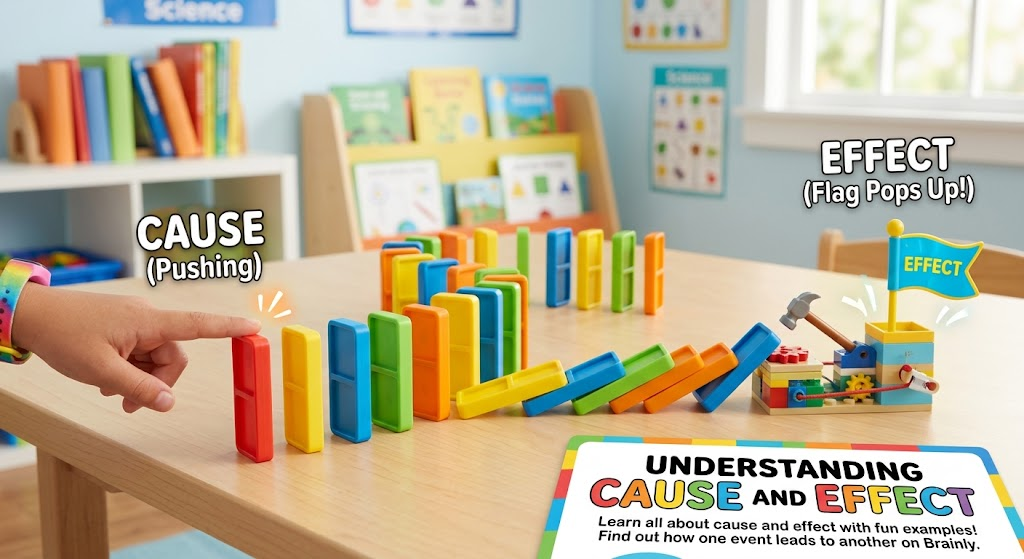
A cause is simply the reason why something happens in the first place. It is the spark that starts the whole process. An effect is what happens as a direct result of that spark. Think of it like a domino line. When you push the very first piece, it falls over and hits the next one. Understanding this simple concept makes reading stories, doing science projects, and solving everyday puzzles so much easier and way more fun.
The Domino Effect in Real Life
Let us look at a super simple daily example to see how this works right in your own home. Imagine you wake up late on a school morning and forget to eat your breakfast. Because you rushed out the door without any food in your tummy, you feel super tired and hungry during your math class.
In this little story, skipping breakfast is the cause. Feeling sluggish and distracted during math class is the direct effect. Every single choice we make creates a ripple effect in our daily lives. When you search for a cause and effect brainly discussion board, you will find tons of creative examples shared by students. People might talk about dropping an egg on the kitchen floor or forgetting to water a houseplant. Each event has a clear beginning and a clear ending result that makes total sense.
Why Do We Study This in School?
Teachers love talking about cause and effect because it helps our brains make sense of complex stories and science lessons. When you read a cool book about dinosaurs or space, knowing how events connect helps you remember the facts much better.
If a volcano erupts with hot lava, the towns nearby must evacuate their homes quickly. The eruption is the cause, and moving to a safe place is the effect. When students get stuck on their homework questions, they often look up cause and effect brainly pages to see how other kids explain these big ideas. Breaking big concepts down into tiny pieces helps everyone learn faster. You start seeing these patterns everywhere you look, from history classes to your favorite Saturday morning cartoons.
Signal Words to Help You Spot Them
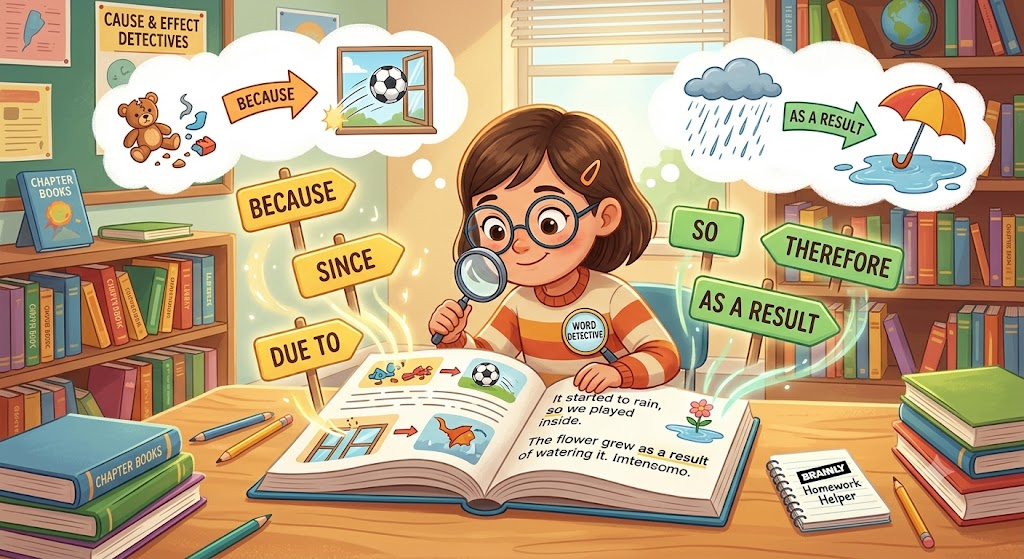
Did you know there are special little helper words that tell you a cause or an effect is coming up soon? Writers use these handy transition words to guide the reader through a story or an explanation without any confusion.
Some of the most popular signal words for causes include “because,” “since,” and “due to.” On the other side, words like “so,” “therefore,” and “as a result” point right toward the effect. If you look at a cause and effect brainly homework helper post, you will spot these exact words used in almost every single explanation. Practice looking for these secret clues the next time you read a chapter book. Once you train your eyes to spot them, figuring out the plot of any story becomes an absolute breeze.
Fun Science Experiments to Try at Home
Science is basically one giant study of cause and effect! Think about mixing baking soda and vinegar together in a plastic cup. You add the ingredients together, and suddenly, fizzy bubbles start erupting over the sides like a mini volcano.
The mixing of the two liquids is the cause, and the bubbly chemical reaction is the effect. If you ever need cool ideas for a school science fair project, checking out a cause and effect brainly thread can give you awesome inspiration. You can test what happens when you leave an ice cube out in the warm sun versus putting it in the freezer. Every little test you run proves how the physical world reacts to simple changes. Science lets us test our ideas and watch the results happen right before our eyes.
Reading Stories and Finding the Clues
When you curl up with a good mystery book or an adventure novel, the characters are always making choices that change the plot. If a character forgets to lock their front door, a sneaky raccoon might wander inside and eat their snacks.
Forgetting the lock is the cause, and the hungry raccoon is the funny effect. Readers love analyzing these moments because it keeps the story exciting and unpredictable. Many students use cause and effect brainly study guides to prep for reading tests and book reports. By spotting why characters take certain actions, you can predict what might happen next in the final chapters. It is like becoming a literary detective who solves the mystery of the plot step by step.
History and How the Past Shapes Today
History is full of massive turning points where one single event changed the entire course of the world. Think about the invention of the wheel thousands of years ago. Before the wheel, moving heavy stones and items across long distances was incredibly difficult.
Because clever inventors created the wheel, people could build carts, travel faster, and trade goods with faraway towns. The invention is the historical cause, and modern transportation is the huge effect. When history students do research projects, looking at a cause and effect brainly question bank helps them organize their thoughts clearly. Understanding history is not just about memorizing random dates; it is about seeing how the past connects directly to the world we live in right now.
Weather Patterns and Mother Nature
Mother Nature provides some of the most dramatic cause-and-effect scenarios we experience every single year. Have you ever noticed how dark, gray clouds roll in right before a heavy thunderstorm starts pouring rain?
The buildup of moisture and cool air in the sky is the cause, and the booming thunder with heavy rain is the effect. Whenever kids study weather systems in geography class, they love exploring cause and effect brainly communities to compare notes with classmates. You can learn why plants need rain to grow tall or why the hot summer sun makes puddles evaporate into thin air. Nature is constantly showing us how every action in the environment balances out with a reaction.
Technology and Our Daily Habits
Technology changes so fast, and every new gadget brings a whole new set of results to our daily routines. Think about what happens when you leave your tablet or phone plugged into the charger overnight.
Plugging it in is the cause, and waking up to a fully powered battery is the effect. If a device ever stops working properly, people often search online like a cause and effect brainly user to find troubleshooting tips and answers. Understanding how technology reacts to our inputs helps us use computers and phones safely and smartly. Every button we click and every app we open creates a digital response on our screens.
Solving Problems and Making Good Choices
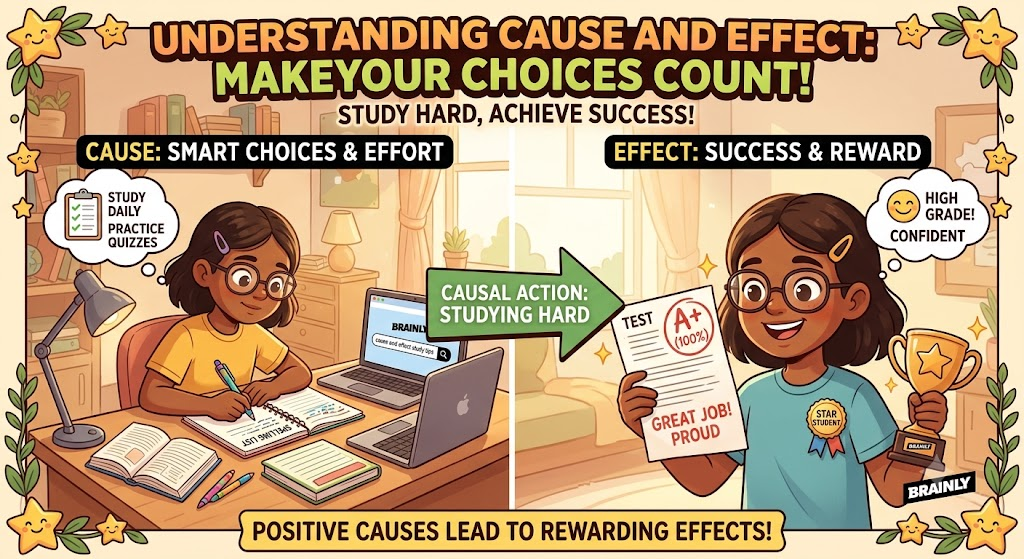
Every single day, we face choices that test our problem-solving skills. If you study hard for your spelling test all week long, you are much more likely to earn a high grade and feel super proud of yourself.
Studying is the positive cause, and getting a great grade is the rewarding effect. When young learners look for advice on handling school stress, searching for a cause and effect brainly topic can reveal helpful study habits. Making smart choices sets you up for success and keeps your daily routine running smoothly. Whenever you face a tricky problem, pause for a moment to think about what the outcome of your choice might be before you act.
Frequently Asked Questions
What is the difference between a cause and an effect?
A cause is why something happens, while an effect is what actually happens as a result. Think of the cause as the push and the effect as the movement.
How can a cause and effect brainly search help with homework?
It lets you see simple explanations, student questions, and real examples that make tricky school topics much easier to understand.
Can there be more than one effect for a single cause?
Yes, absolutely! One single event can trigger multiple reactions at the same time, just like dropping a pebble in a pond creates many ripples.
What are some common signal words I should look for?
Words like “because,” “since,” “so,” and “therefore” are great clues that show how two events are connected to each other.
Why is learning this skill important for reading comprehension?
It helps you follow the storyline, understand character motivations, and remember important facts from your textbooks and storybooks.
How do science experiments show cause and effect?
Experiments let you change one variable, like adding heat or mixing liquids, so you can observe the exact reaction that takes place.
Conclusion
Mastering how events connect opens up a whole new way of looking at school, nature, and everyday life. By breaking down reasons and results, you build stronger problem-solving skills that help you succeed in every subject. Keep asking great questions, exploring new ideas, and sharing what you learn with your friends. Try looking up a new topic today, test out a fun science experiment at home, and see how many cause-and-effect chains you can spot around you!