
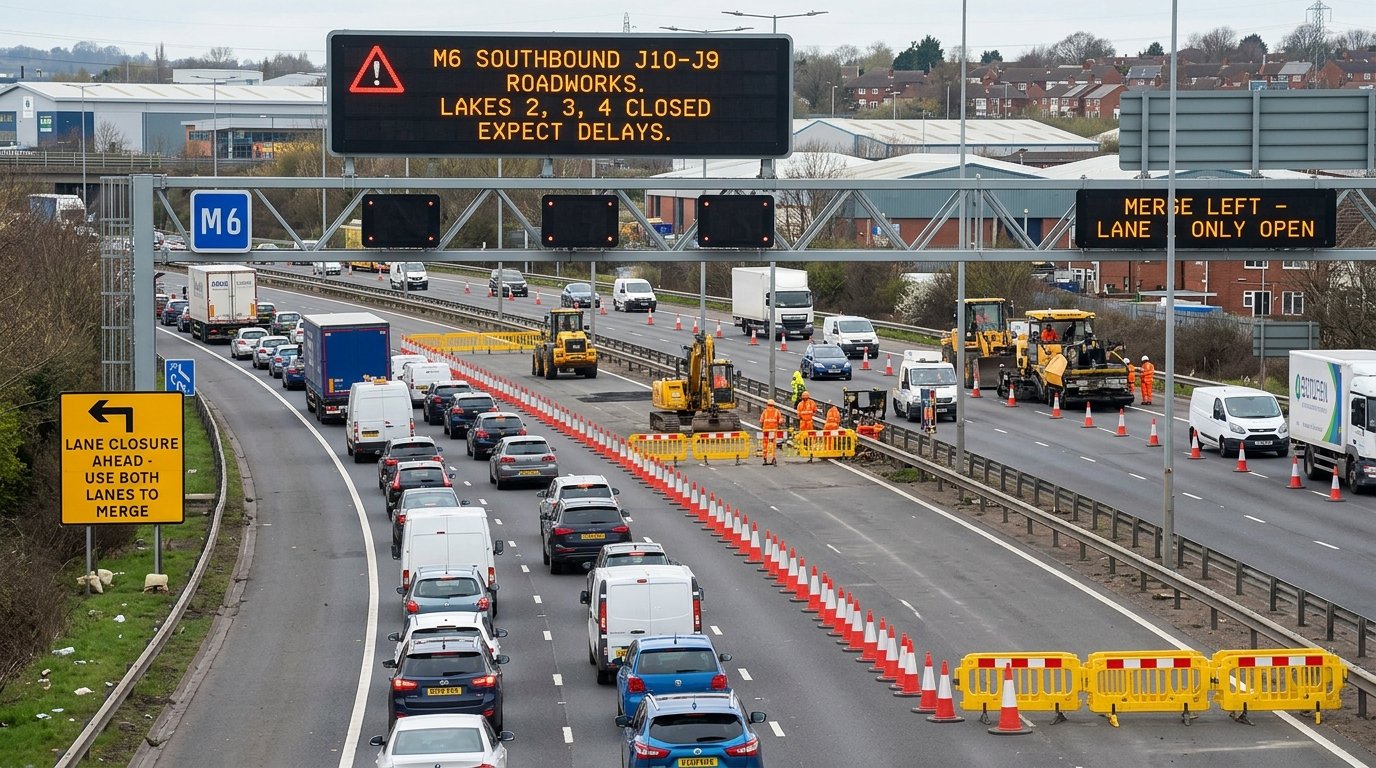
The m6 walsall birmingham lanes closure has become a major concern for commuters, business travelers, and local residents across the West Midlands. Drivers using the M6 between Walsall and Birmingham are experiencing delays, reduced speed limits, and temporary diversions due to ongoing roadworks and motorway improvement projects. Because this route is one of the busiest motorway corridors in the UK, even a single lane closure can create traffic build-up that affects nearby roads, junctions, and surrounding towns. Many travelers are now searching for updated information about the closures, expected completion dates, and the best alternative routes to avoid heavy congestion.
The current m6 walsall birmingham lanes closure is part of wider motorway maintenance and smart traffic management upgrades designed to improve long-term road safety and driving conditions. Authorities are carrying out resurfacing work, drainage repairs, bridge inspections, and technology upgrades to reduce future congestion and improve traffic flow across Birmingham and Walsall. Although temporary closures can frustrate motorists, these projects are intended to create smoother journeys and safer driving conditions in the future. Drivers are advised to check live traffic updates regularly, especially during rush hours and weekend travel periods when delays can become significantly worse.
Why the M6 Walsall Birmingham Lanes Closure Is Happening
The main reason behind the m6 walsall birmingham lanes closure is essential motorway maintenance and infrastructure improvement work. Over time, heavy traffic volumes cause wear and tear on road surfaces, barriers, drainage systems, and motorway technology. Engineers are now working on several upgrades designed to improve safety and reduce long-term traffic congestion in the region.
Another important reason for the closures is the installation and maintenance of smart motorway systems. These systems include upgraded traffic cameras, digital signs, emergency refuge areas, and traffic monitoring equipment. Officials believe these improvements will help traffic move more efficiently between Birmingham and Walsall once the projects are completed.
“Short-term disruption on major motorways often leads to long-term safety and traffic improvements.”
Areas Most Affected by the Lane Closures
Several sections of the motorway have been affected by the m6 walsall birmingham lanes closure, especially near busy junctions connecting local roads and industrial areas. Junctions around Walsall, Great Barr, and central Birmingham have seen increased congestion during both morning and evening peak hours. Drivers often experience delays near merging points where traffic is reduced into fewer lanes.
Traffic conditions can become particularly difficult during weekends and holiday travel periods. Commercial vehicles, delivery trucks, and long-distance travelers frequently use this route, which adds additional pressure to already congested motorway sections. Nearby roads including the A34, M5, and M42 also experience heavier traffic whenever major lane restrictions are active on the M6.
Expected Traffic Delays and Travel Impact
Motorists using the motorway should expect varying levels of delays depending on the time of day and the specific closure schedule. During peak commuting hours, the m6 walsall birmingham lanes closure can add significant travel time to regular journeys. Traffic queues may stretch for several miles, especially during accidents or poor weather conditions.
Drivers traveling for work or business meetings are advised to allow extra travel time. Navigation apps can help identify alternative routes, but many nearby roads also become congested when motorway traffic diverts away from the closure zones. Public transport services in Birmingham and Walsall may also experience increased passenger numbers as some commuters avoid motorway driving altogether.
Smart Motorway Upgrades and Their Benefits
One major element connected to the m6 walsall birmingham lanes closure is the ongoing smart motorway improvement program. Smart motorways use advanced traffic management systems to control vehicle flow and reduce sudden congestion. Electronic signs can display variable speed limits based on live traffic conditions, helping drivers move more smoothly during busy periods.
Supporters of smart motorways argue that these systems improve traffic efficiency and reduce stop-start congestion. Emergency refuge areas and enhanced CCTV monitoring also help emergency services respond more quickly to accidents and vehicle breakdowns. Although the construction phase creates temporary frustration, transportation authorities believe the upgrades will benefit drivers across the West Midlands in the future.
Alternative Routes Drivers Can Use
Drivers affected by the m6 walsall birmingham lanes closure are increasingly looking for reliable alternative routes to avoid delays. Depending on traffic conditions, some motorists choose to use the M5 or local A-roads to bypass congested sections of the motorway. However, these roads can also become busy during major closure periods.
Below is a helpful table showing possible alternative routes for drivers traveling between Walsall and Birmingham:
| Alternative Route | Best For | Traffic Level |
|---|---|---|
| M5 Southbound | Long-distance travel | Moderate to Heavy |
| A34 Route | Local commuting | Moderate |
| M42 Connection | Airport and eastern routes | Moderate |
| Local Walsall Roads | Short local trips | Heavy during peak hours |
Planning journeys in advance is extremely important during periods of motorway maintenance. Checking live traffic updates before leaving can help drivers avoid unnecessary delays and stress.
Economic Impact of the Lane Closures
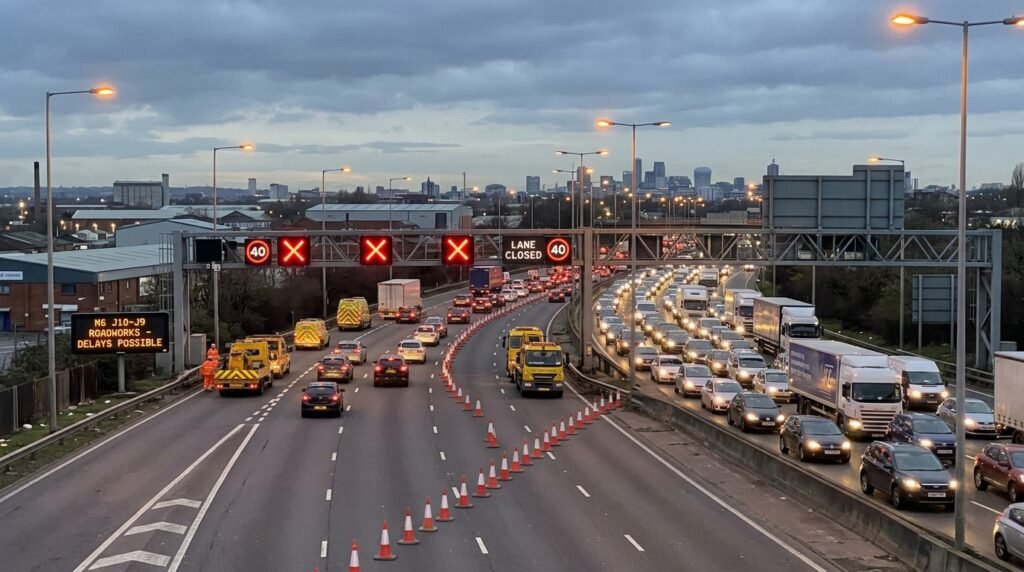
The m6 walsall birmingham lanes closure is not only affecting daily commuters but also local businesses and logistics companies. The M6 is a key transport route for goods moving across the Midlands and beyond. Delays caused by lane restrictions can increase fuel costs, delivery times, and operational expenses for businesses that rely on efficient transportation networks.
Retailers, delivery services, and freight operators are among the sectors experiencing the biggest impact. Businesses located near Birmingham and Walsall may also notice reduced customer traffic during periods of severe motorway congestion. Despite the short-term challenges, authorities argue that improved motorway infrastructure will eventually support stronger economic activity and smoother transportation across the region.
Safety Advice for Drivers During Lane Closures
Driving through motorway roadworks requires extra caution and patience. The m6 walsall birmingham lanes closure creates narrower lanes, temporary speed restrictions, and changing traffic patterns that can confuse some motorists. Drivers should remain alert and follow all displayed signs carefully while approaching construction areas.
Maintaining safe distances between vehicles is especially important in slow-moving traffic. Sudden braking and lane changes increase the risk of accidents near roadworks. Drivers should also avoid distractions such as mobile phones while navigating through restricted motorway sections. Staying calm and patient can help reduce stress during long traffic delays.
“Safe driving in roadwork zones protects both motorists and highway workers.”
How Local Residents Are Reacting
Local residents across Birmingham and Walsall have shared mixed reactions regarding the m6 walsall birmingham lanes closure. Some people understand the need for infrastructure improvements and believe the projects will reduce future congestion. Others are frustrated by daily delays, longer commuting times, and increased traffic on local residential roads.
Social media discussions often highlight concerns about poor timing, unclear diversions, and unexpected overnight closures. Businesses near motorway junctions have also raised concerns about reduced customer access during peak construction periods. Despite these frustrations, many residents hope the completed upgrades will eventually create more reliable motorway travel conditions.
Environmental Effects of Increased Traffic Congestion
Traffic congestion linked to the m6 walsall birmingham lanes closure may also have environmental consequences. Vehicles stuck in slow-moving traffic often produce higher emissions due to constant braking and acceleration. Increased congestion on surrounding roads can contribute to poorer air quality in nearby urban areas.
However, transportation planners argue that long-term motorway improvements could eventually reduce emissions by creating smoother traffic flow and reducing stop-start driving conditions. Modern traffic management systems are designed to improve efficiency and reduce unnecessary congestion once construction work is completed.
Tips to Avoid Delays During M6 Closures
Drivers can reduce travel stress during the m6 walsall birmingham lanes closure by planning ahead and adjusting travel habits where possible. Leaving earlier than usual can help avoid peak-hour congestion, especially for commuters traveling toward Birmingham city center during weekday mornings.
Using live traffic apps and navigation tools is also highly recommended. These platforms provide real-time updates on accidents, delays, and alternative routes. Car sharing, public transportation, and remote working options may also help reduce the number of vehicles using the motorway during busy periods.
Future Expectations for the M6 Route
Authorities expect the current m6 walsall birmingham lanes closure projects to improve motorway safety and efficiency over the coming years. Once upgrades are complete, drivers may benefit from better traffic flow, improved road surfaces, and enhanced motorway monitoring systems.
Future infrastructure investment across the West Midlands is likely to continue as traffic demand grows. Birmingham remains a major economic and transportation hub, making motorway modernization essential for supporting future population growth and business activity in the region.
Conclusion
The m6 walsall birmingham lanes closure continues to affect thousands of drivers traveling through one of the UK’s busiest motorway corridors. While the temporary disruptions have created frustration for commuters and businesses, the ongoing maintenance and smart motorway upgrades are designed to improve long-term safety, traffic flow, and driving conditions across Birmingham and Walsall.
Drivers can minimize delays by checking live traffic updates, planning alternative routes, and allowing extra travel time during busy periods. Although roadworks are inconvenient, the improvements being carried out today are expected to create a more reliable and efficient motorway network for future travel across the West Midlands.
FAQ
What is causing the M6 Walsall Birmingham lanes closure?
The m6 walsall birmingham lanes closure is mainly caused by motorway maintenance, resurfacing projects, smart motorway upgrades, bridge inspections, and drainage repairs designed to improve road safety and traffic flow.
Which areas are most affected by the lane closures?
The busiest areas affected by the m6 walsall birmingham lanes closure include junctions near Walsall, Great Barr, and central Birmingham where traffic volumes are already very high during peak hours.
How long will the M6 lane closures continue?
Closure schedules vary depending on the type of work being completed. Some sections may experience overnight closures for a few weeks, while larger motorway upgrades could continue for several months.
Are there alternative routes available during the closures?
Yes, drivers affected by the m6 walsall birmingham lanes closure can use routes such as the M5, A34, and M42 depending on their destination and current traffic conditions.
Do smart motorway upgrades improve traffic flow?
Transportation authorities believe smart motorway systems help reduce congestion by using variable speed limits, traffic monitoring technology, and improved traffic management tools across busy motorway sections.
How can drivers avoid delays during motorway closures?
Motorists can reduce delays by checking live traffic updates, traveling outside peak hours, planning alternative routes, and allowing extra time for journeys through affected motorway sections.